Mount Meru Trekking Itineraries
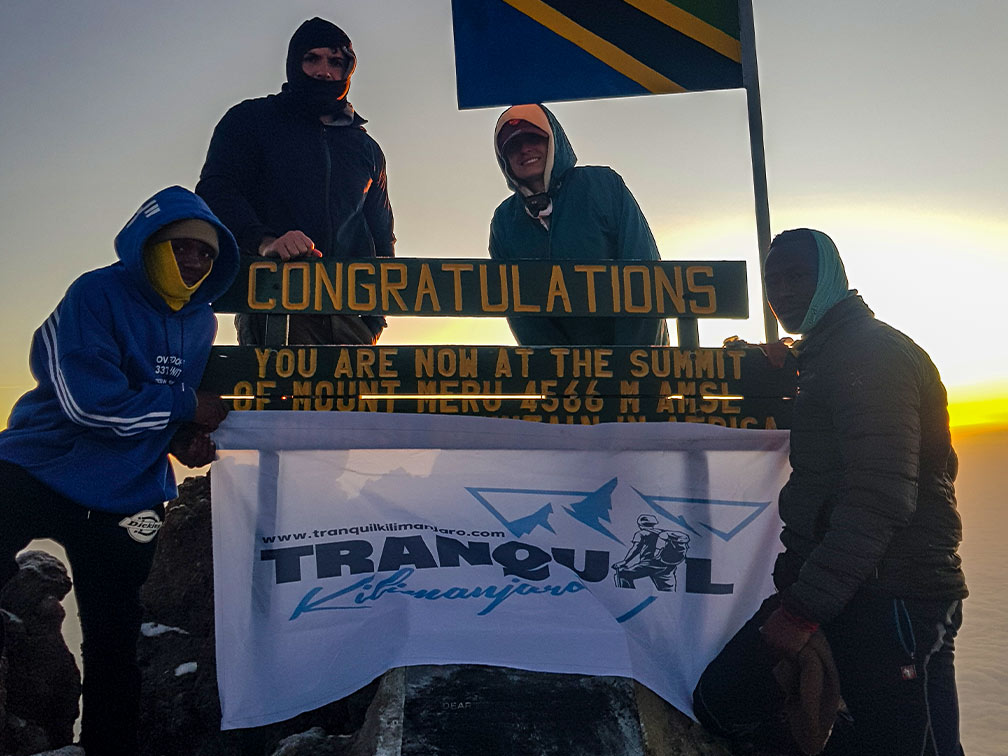
All official ascents follow a single path, the Momella Route. Climbers begin at Momella Gate, around 1,500 metres above sea level. The trail climbs through open grassland and montane forest to Miriakamba Hut at approximately 2,514 metres, continues through heath and moorland to Saddle Hut at 3,570 metres, and finally follows the exposed crater rim to Socialist Peak. The round-trip distance is roughly 45–46 kilometres. Most parties take four days; a compressed three-day version is possible for very fit trekkers but leaves less margin for acclimatisation.
Arusha National Park
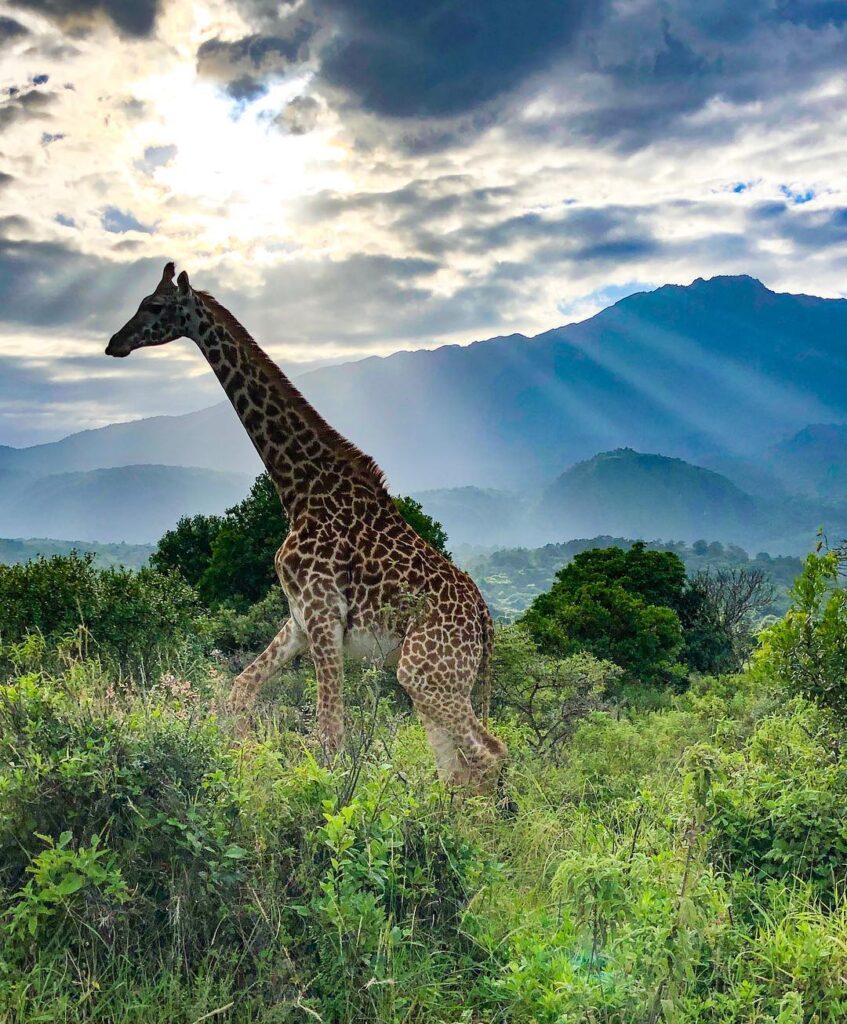
Arusha National Park is a compact but remarkably diverse protected area in northern Tanzania, covering about 137 square kilometres just 25 kilometres northeast of Arusha city. Established in 1960, it centres on Mount Meru, Tanzania’s second-highest peak at 4,566 metres, and sits within easy reach of Kilimanjaro International Airport.The park packs three contrasting landscapes into a small space: the forested slopes and dramatic crater of Mount Meru, the shallow alkaline Momella Lakes in the northeast, and the grassy Ngurdoto Crater—often called a miniature Ngorongoro—in the southeast. These habitats support a dense population of giraffes, along with Cape buffalo, zebra, warthog, bushbuck, black-and-white colobus monkeys and blue monkeys. Elephants appear occasionally, while leopards are present but seldom seen. More than 400 bird species have been recorded, including flamingos on the lakes and colourful forest birds such as Hartlaub’s turaco.
Visitors can combine game drives, guided walks, canoeing on the Momella Lakes and, for the more energetic, multi-day climbs of Mount Meru. Its proximity to Arusha makes it ideal for a half-day or full-day excursion, or as a gentle introduction to Tanzania’s northern circuit before continuing to larger parks.
Combine Mount Meru & Kilimanjaro (2 peaks, 2 Weeks)
Combining a Mount Meru (4,566 m) and Mount Kilimanjaro (5,895 m) trek is the ultimate Tanzania high-altitude climbing strategy. Climbing Meru first acts as a natural acclimatization phase, boosting your red blood cells and significantly increasing your physiological success rate for reaching Uhuru Peak on Kilimanjaro a few days later.
Or
What Our Climbers Say
Discover experiences and reviews from our adventurous guests.


Best time to climb Mount Meru
The most reliable seasons are the long dry period from June to October and the shorter dry window from December to February. These months bring firmer trails, clearer skies and the best chance of unobstructed summit views. The long rains of March to May and the short rains of November make paths muddy and can obscure visibility, though the mountain remains open.
How much to climb Mount Meru?
Packages typically include park and hut fees, an armed ranger, a mountain guide, porters, cook, meals and transport from Arusha. Costs in recent seasons have ranged from roughly 500 to 1,500 US dollars per person, depending on group size, itinerary length and level of service. Cash tips for the crew are customary and should be budgeted separately. What sets Mount Meru apart is the combination of genuine wilderness and manageable challenge. The lower trail feels like a walking safari; the upper ridge offers one of the finest high-mountain viewpoints in East Africa; and the whole experience remains far less crowded than the routes on Kilimanjaro. Climbers who arrive prepared, respect the mandatory ranger presence, and allow time for acclimatisation find a mountain that rewards effort with dramatic scenery, wildlife encounters and a genuine sense of achievement.
Is Mount Meru hard?
The climb is rated moderate to challenging. No specialised mountaineering experience is needed, yet the sustained steepness, the long summit day of ten to twelve hours, and the altitude demand solid cardiovascular fitness and previous multi-day hiking experience. Summit success rates are high when the four-day schedule is followed. Altitude-related symptoms remain the main risk; gradual ascent and careful self-monitoring are essential.
How many days do I need to climb Mount Meru?
You need at least 3 days to climb Mount Meru. A typical four-day schedule unfolds as follows. On the first day, the group walks four to six hours from the gate to Miriakamba Hut, gaining about 1,000 metres. The lower slopes form part of a living national park, so an armed Tanzania National Parks ranger is required for the entire lower section. Giraffe, buffalo, zebra, warthog, bushbuck and troops of black-and-white colobus monkeys are commonly seen. The forest is also rich in birds such as Hartlaub’s turaco and silvery-cheeked hornbills. Overnight accommodation is in simple but solid dormitory-style huts with bunk beds and basic facilities. The second day is shorter in distance yet steeper.
The path rises through thinning forest and giant heather to Saddle Hut. Many climbers use the afternoon for an optional acclimatisation walk to the nearby Little Meru peak at 3,820 metres, which offers wide views of the main crater and, on clear days, Kilimanjaro. The third day begins around midnight. Headlamps light the steep climb to Rhino Point (about 3,850 metres) and then along the narrow, ashy crater rim. The final section requires careful foot placement on loose rock but no technical climbing skills or ropes. Summiting Socialist Peak at sunrise rewards climbers with a 360-degree panorama that includes the ash cone far below and the full profile of Kilimanjaro catching the first light. Descent returns either to Saddle Hut or, more commonly on the four-day itinerary, continues down to Miriakamba for the final night. The fourth day is a steady walk out through the forest back to Momella Gate.
Why Choose Us
Or